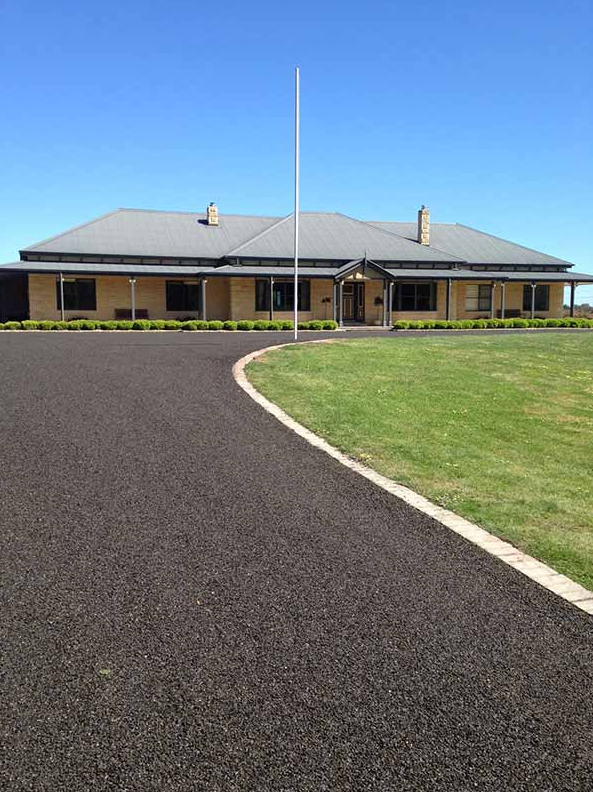
A bitumen road can remain structurally sound long after its surface begins showing signs of ageing. Years of traffic, sunlight, rainfall and general exposure can gradually affect the protective wearing layer, leaving the road looking faded, rough or inconsistent. As deterioration progresses, aggregate may begin loosening, and sections of the underlying pavement can become increasingly exposed.
When the supporting pavement remains stable, spray and seal bitumen can provide an effective way to renew the surface without unnecessarily replacing the entire road. By applying a fresh bituminous binder and aggregate, contractors can restore a protective wearing layer that helps the pavement continue performing under regular traffic.
For property owners and businesses in Mount Barker, SA, recognising when an ageing road is suitable for resealing can help prevent surface wear from developing into more substantial deterioration. At Mount Barker Road Tech SA, we assess existing bitumen roads to determine whether spray and seal is appropriate and what preparation is required before the new treatment is applied.
What Happens to a Bitumen Road as It Weathers?
Bitumen roads are designed to withstand regular vehicle movements and environmental exposure. However, the materials that make up the surface gradually change over time.
Sunlight, temperature variations, rainfall and repeated tyre contact can contribute to the ageing of the bituminous binder and the wearing surface.
As the surface deteriorates, it may begin displaying several noticeable changes.
These include:
- Fading or discolouration
- Loss of surface consistency
- Increasingly exposed aggregate
- Loose stones
- Minor cracking
- Worn wheel paths
- Localised surface deterioration
- Areas where the protective treatment has become thin or damaged
Not every weathered road requires complete reconstruction. The important consideration is whether the deterioration is confined mainly to the wearing surface or extends into the pavement structure underneath.
How Does Spray and Seal Renew an Existing Road?
Spray and seal involves applying a controlled layer of bituminous binder to a suitably prepared pavement, followed by the distribution of aggregate.
The aggregate is rolled into the binder to establish a bonded wearing surface.
When used to renew an existing sprayed bitumen road, this process is commonly referred to as resealing.
The new treatment provides a fresh surface layer over the existing pavement, helping restore protection against traffic wear and moisture penetration.
What Does the New Surface Actually Achieve?
A professionally applied spray and seal treatment can help:
- Restore a consistent aggregate wearing surface
- Reduce direct exposure of the existing pavement
- Limit water penetration through the renewed surface
- Improve surface texture
- Reduce loose material associated with deteriorated sections
- Protect a stable pavement from continued surface wear
- Extend the useful service life of a suitable existing road
However, these benefits depend on the condition of the pavement before resealing.
Spray and seal is a protective treatment, not a substitute for repairing significant structural weaknesses.
1. It Replaces a Deteriorating Wearing Surface
One of the main reasons to consider resealing is the gradual loss of the road’s original protective surface.
As the existing treatment ages, the binder can become less effective at retaining aggregate. Traffic may then begin dislodging stones, leaving the pavement with an increasingly inconsistent texture.
Applying a new spray and seal treatment restores a bonded aggregate layer over the prepared surface.
This helps protect the existing pavement from direct traffic wear.
Why Is Aggregate Retention Important?
The aggregate provides the textured surface that vehicle tyres travel across.
When aggregate becomes loose or begins stripping away, the protective treatment can lose some of its effectiveness.
A properly installed new seal uses suitable aggregate, consistent binder application and appropriate rolling to establish the required bond.
This helps create a more uniform wearing surface across the road.
2. It Helps Protect Against Water Penetration
Water is an important consideration when maintaining any road.
As a bitumen surface becomes worn, openings and damaged areas may allow rainfall to enter the pavement.
If water reaches the supporting layers, it can contribute to instability, particularly where existing defects are already present.
Spray and seal creates a water-resistant treatment that helps reduce moisture entering through the renewed surface.
Why Does Water Protection Matter?
The pavement underneath the bitumen provides much of the structural support needed to carry vehicles.
When supporting materials become excessively wet, their ability to remain stable can be affected.
Repeated traffic loading over weakened areas may contribute to cracking, rutting and pothole formation.
Resealing a stable pavement can help protect these supporting layers by renewing the surface treatment before deterioration becomes extensive.
However, existing drainage problems, cracks and unstable sections should be addressed before resealing.
3. It Can Improve the Appearance of an Ageing Road
Weathered bitumen surfaces often develop an inconsistent appearance.
Some sections may remain relatively dark, while others become lighter or show greater aggregate exposure. Previous repairs and heavily travelled areas can also create noticeable variations.
A fresh spray and seal treatment can restore a more consistent surface finish.
Although appearance is a benefit, it should not be the main reason for deciding whether resealing is appropriate.
The underlying pavement must still provide a suitable foundation.
A road that looks weathered but remains stable may be a good candidate for renewal, while a road containing significant structural failures requires a different approach.
4. It Can Improve Surface Texture
Surface texture contributes to how vehicle tyres interact with a road.
As a bitumen surface wears, aggregate loss and uneven deterioration can affect the consistency of that texture.
A new spray and seal treatment introduces a fresh aggregate wearing layer.
When the aggregate is correctly selected, distributed and embedded, it can provide a more consistent textured surface suited to the intended traffic conditions.
The effectiveness of the finished treatment depends on the materials used and the quality of the installation.
5. It Helps Preserve the Existing Road Structure
One of the advantages of resealing is that a stable existing pavement can often remain in place.
If the road base continues to provide adequate support, there may be no need to disturb substantial sections of sound pavement simply because the wearing surface has aged.
Instead, the existing road can be assessed, prepared and treated with a new protective seal.
This approach focuses on preserving the pavement structure while renewing the surface that receives regular traffic wear.
When Is the Existing Structure Worth Preserving?
A road may be suitable for resealing when:
- The supporting pavement remains stable
- Rutting is absent or limited to defects that can be repaired
- Surface wear is more extensive than structural damage
- Existing repairs remain sound
- Drainage is functioning appropriately
- There is no widespread settlement
- The road remains suitable for its intended traffic
A professional assessment is necessary because some underlying problems may not be immediately obvious from the surface appearance.
6. It Can Address Widespread Surface Ageing
A weathered road may contain numerous small areas of deterioration rather than one major defect.
For example, the surface might have scattered aggregate loss, general fading and minor wear along regular wheel paths.
Treating every small area individually may not provide the same consistency as renewing the wearing surface across the wider pavement.
Where the underlying road remains sound, resealing can address general surface ageing as part of one coordinated treatment.
However, localised failures should still be repaired during preparation.
The new seal should be applied over a pavement that is suitable to receive it.
When Is a Bitumen Road Ready for Resealing?
The ideal time to assess resealing is before deterioration has progressed into widespread pavement failure.
A road does not necessarily need to contain large potholes or severe cracking before surface renewal becomes worthwhile.
Signs that resealing may be appropriate include:
- General surface fading and weathering
- Increasing aggregate loss
- Worn sections along wheel paths
- Minor surface deterioration
- An inconsistent wearing surface
- Areas where the existing seal is losing effectiveness
These symptoms should be considered alongside the road’s structural condition.
If the surface is weathered but the supporting pavement remains stable, spray and seal may be a suitable treatment.
What Problems Must Be Repaired Before Resealing?
Spray and seal should not be applied simply to conceal existing damage.
A new surface treatment follows the general profile of the pavement underneath and does not provide the structural thickness needed to correct significant base failures.
Before resealing, contractors should assess the road for defects requiring repair.
Potholes
Potholes may indicate that the existing pavement has broken apart or that supporting material has become unstable.
The damaged area should be repaired appropriately before the new seal is applied.
Deep Rutting
Significant wheel ruts can indicate deformation within the pavement.
If the supporting material has moved, the affected section may require deeper preparation.
Settlement
Sunken areas can result from weak base material, poor compaction or other pavement movement.
These sections should be assessed before the road profile is restored.
Cracking
The extent and cause of cracking need to be considered.
Minor defects may be manageable during preparation, while widespread structural cracking can indicate that resealing alone is unsuitable.
Drainage Problems
Standing water and incorrect surface falls should be addressed where necessary.
A new seal cannot compensate for a road profile that continually directs water into unsuitable areas.
Why Is Surface Preparation So Important?
The effectiveness of spray and seal depends heavily on the condition of the existing pavement.
Before application, the road should be assessed and prepared to provide a suitable surface for the bituminous binder.
Preparation may involve cleaning, removing loose material, repairing localised defects and correcting sections that are unsuitable for sealing.
Where pavement levels or structural support are inadequate, additional preparation may be required.
A New Seal Needs a Stable Foundation
The spray and seal treatment provides a wearing surface, but it does not replace the structural function of the road base.
If the underlying pavement continues moving under traffic, the new surface may also deteriorate.
This is why a professional contractor should establish whether the road is structurally suitable for resealing before proceeding.
How Is Spray and Seal Applied to an Existing Road?
Although the exact process depends on the pavement condition and treatment specification, professional spray and seal generally involves several stages.
1. Road Assessment
The existing surface is inspected to identify wear, aggregate loss, cracking, potholes, drainage concerns and possible structural weaknesses.
2. Surface Preparation
Loose material and contamination are removed, while defects requiring repair are addressed.
The pavement needs to be suitable for the proposed treatment.
3. Bitumen Application
The selected bituminous binder is sprayed at an appropriate application rate.
Consistent application is important for achieving the intended aggregate bond.
4. Aggregate Distribution
Suitable aggregate is spread across the binder to provide the required coverage.
5. Rolling
The aggregate is rolled into the binder to establish the bonded wearing surface.
6. Surface Establishment
The newly sealed road is managed according to the requirements of the treatment, including appropriate traffic control during its early service period.
Each stage contributes to the quality and performance of the finished surface.
Can Spray and Seal Correct an Uneven Road?
Spray and seal is not primarily a levelling treatment.
If the existing road contains depressions, deep ruts or poorly formed surface falls, these conditions may remain after sealing unless they are corrected beforehand.
Where the pavement structure is stable, suitable grading or localised preparation may help restore the required profile.
However, if unevenness results from base movement or settlement, the affected areas may need deeper repair.
The correct approach depends on why the road has become uneven.
Spray and Seal or Asphalt Resurfacing: Which Is More Suitable?
Both treatments can be used to renew suitable existing pavements, but they perform different functions.
Spray and seal creates a relatively thin protective surface using bituminous binder and aggregate.
Asphalt resurfacing involves placing and compacting a new asphalt layer over an appropriately prepared pavement.
Spray and seal may be suitable where the main objective is renewing the protective wearing surface of a stable road.
Asphalt resurfacing may be considered where a new asphalt layer is more appropriate for the existing pavement condition and intended use.
Neither treatment should be expected to correct major structural failures without suitable preparation.
A professional assessment helps determine the most appropriate solution.
Why Does Professional Application Matter?
A successful spray and seal treatment requires careful coordination between preparation, materials and installation.
Incorrect binder application, unsuitable aggregate distribution or inadequate rolling can affect aggregate retention and surface performance.
Likewise, applying a new seal over unstable pavement can leave underlying weaknesses unresolved.
At Mount Barker Road Tech SA, we assess bitumen roads in Mount Barker, SA, with attention to the existing surface, supporting pavement, drainage and expected traffic.
This helps determine whether resealing is appropriate and what preparation is required to support the renewed surface.
How Can You Help Maintain a Newly Resealed Road?
Once the treatment has established, routine observation and timely maintenance can help preserve the surface.
Property owners should remain attentive to:
- Developing potholes
- Unusual aggregate loss
- New cracking
- Standing water
- Eroding pavement edges
- Repeated deterioration in specific areas
Any significant changes should be assessed before they develop into more extensive problems.
A properly installed surface still benefits from maintenance that addresses developing defects early.
Conclusion
Spray and seal can refresh a weathered bitumen road by renewing its protective wearing layer, improving surface consistency and helping reduce water penetration into the supporting pavement.
It is particularly useful where the existing road has experienced general surface ageing but remains structurally stable.
However, the condition of the underlying pavement is essential. Significant potholes, deep rutting, settlement and drainage problems should be assessed and repaired before resealing rather than simply covered by a new treatment.
For property owners and businesses in Mount Barker, SA, Mount Barker Road Tech SA provides professional asphalt and bitumen surfacing, including spray and seal applications designed around the condition and intended use of the existing pavement.
If your bitumen road is beginning to look weathered, lose aggregate or show signs of surface deterioration, contact Mount Barker Road Tech SA to arrange an assessment and discuss whether professional spray and seal resurfacing is the appropriate solution.
Call us on: 08 6727 9106
Click here to find out more about Mount Barker SA
Click here to complete our contact form and see how we can help with your Asphalt and Bitumen Surfacing needs.